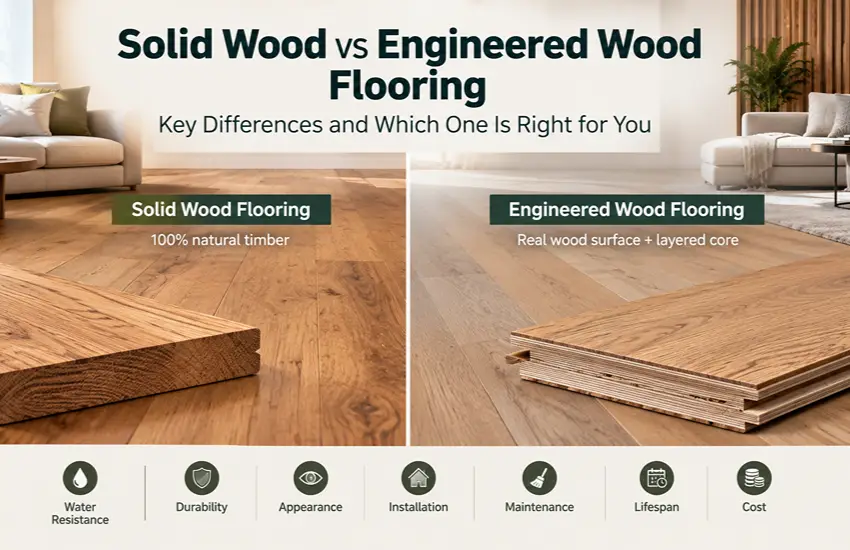
Choosing a wooden flooring design isn’t just about picking a wood tone anymore — the layout pattern has become just as important to the final look of a room. Walk into any newly renovated villa or apartment in Dubai Marina or Arabian Ranches today, and you’ll likely spot one of three layout styles: classic straight-plank, elegant herringbone, or dramatic chevron.
Each pattern changes how light moves across a floor, how spacious a room feels, and how much the installation ultimately costs. In this guide, we break down herringbone, chevron, and straight-plank flooring side by side, so you can pick the layout that fits your interior design goals, budget, and maintenance expectations.
Quick Overview: What Makes Each Pattern Different?
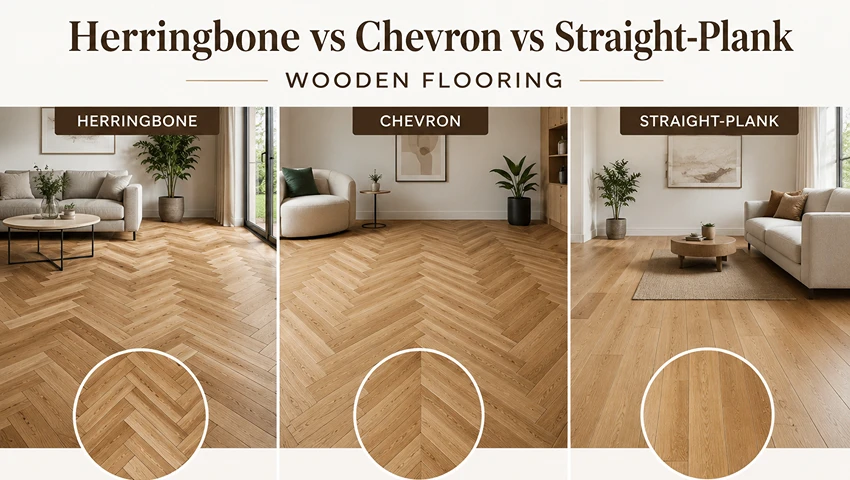
Before comparing the details, here’s the core distinction between the three layouts:
- Straight-plank flooring — boards run in parallel, uninterrupted rows, either along or across the length of the room.
- Herringbone flooring — rectangular planks are laid at 90-degree angles to one another, creating a zigzag, arrow-like pattern with a broken visual step between each row.
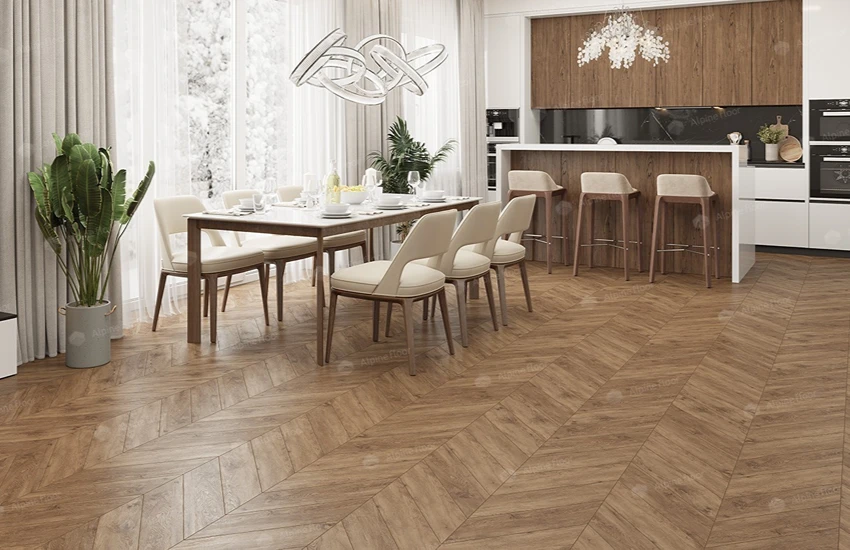
- Chevron flooring — planks are cut at an angle (usually 45 or 60 degrees) so their ends meet in a perfectly continuous “V” shape, forming one unbroken diagonal line.
All three patterns can be achieved in solid hardwood, engineered wood, laminate, or even wood-look LVT flooring — so the pattern you love doesn’t have to be limited to one material type.
Straight-Plank Flooring: The Timeless, Budget-Friendly Choice
Straight-plank layouts remain the most popular flooring style worldwide, and for good reason.
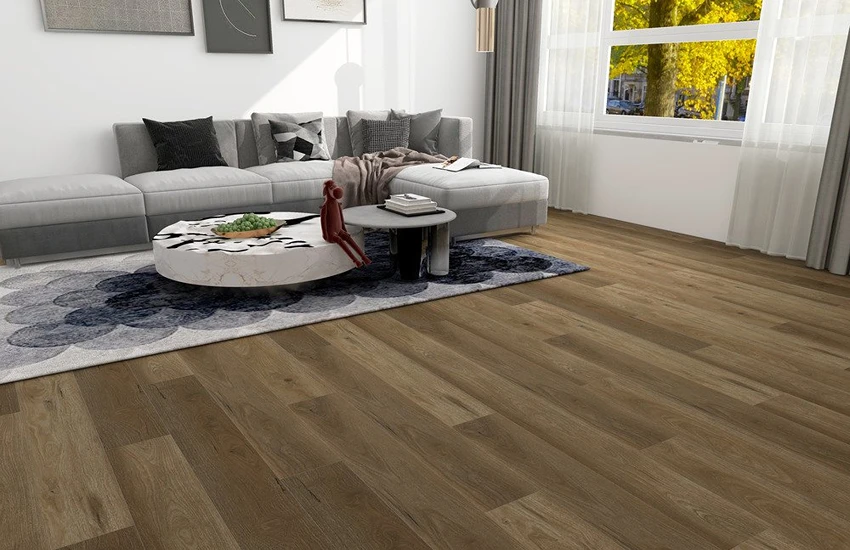
What it looks like: Long, uniform boards laid in simple parallel rows, usually staggered slightly at the joints for a natural, brick-like offset.
Pros:
- Lowest installation cost of the three patterns, since there’s minimal cutting and wastage
- Fastest to install, which matters for time-sensitive renovation projects
- Makes narrow rooms and hallways feel longer when boards run with the length of the space
- Works with almost every interior style, from minimalist to traditional Arabic-inspired decor
Cons:
- Considered the “safe” or standard option — it doesn’t add the visual drama that patterned layouts offer
- Long, uninterrupted lines can make a very large open-plan space feel slightly plain without an area rug or furniture to break it up
Best for: Bedrooms, open-plan living areas, rental properties, and any project where budget and installation speed are priorities. It also pairs beautifully with our hardwood flooring range for a clean, contemporary base.
Herringbone Flooring: Classic Elegance with a Geometric Twist
Herringbone is a pattern with centuries of history in European palaces and parquet halls, and it’s currently one of the most requested layouts for premium villas and hotel lobbies in the UAE.
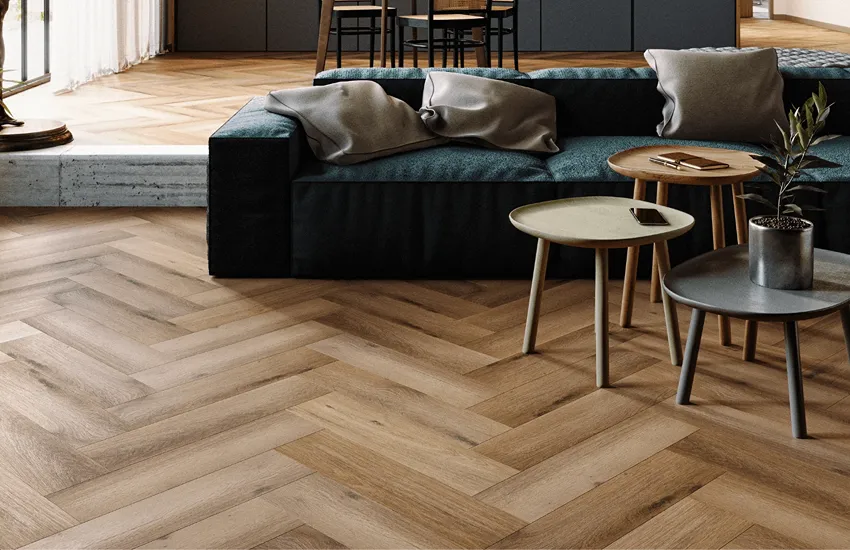
What it looks like: Rectangular planks set at right angles to each other, forming a repeating “V” or zigzag with a visible step at each joint — similar to the bones of a fish, which is where the name comes from.
Pros:
- Adds instant texture and sophistication to a room without needing extra decor
- Works exceptionally well in classic, transitional, or Art Deco-style interiors
- Available as pre-assembled herringbone panels, which speeds up installation compared to laying individual planks
- A strong resale-value feature in villas and high-end apartments
Cons:
- Requires more planks and more precise cutting than straight layouts, increasing material cost
- Installation demands a skilled fitter — an uneven herringbone pattern is far more noticeable than an uneven straight-plank floor
- Slightly higher labor cost due to the extra time needed for layout and cutting
Best for: Living rooms, formal dining areas, entryways, and feature spaces where you want the floor itself to be a design statement. Herringbone is available across our parquet flooring collection and in several wood-effect vinyl designs as well.
Chevron Flooring: Bold, Continuous, and Head-Turning
Chevron is often mistaken for herringbone, but the two are structurally different, and the visual result is noticeably distinct.
What it looks like: Planks are pre-cut at an angle so that when two boards meet, they form one seamless, unbroken “V” line — no offset step like herringbone has. The result is a sharper, more streamlined, and often more dramatic diagonal pattern.
Pros:
- Creates one of the most striking, high-end visual effects available in wood flooring
- The continuous line draws the eye and can make a room feel more dynamic and larger
- A favorite in modern luxury interiors, boutique hotels, and statement retail spaces
Cons:
- The most expensive of the three patterns, due to the precision angle-cutting required for every plank
- Needs the most experienced installers — angle alignment mistakes are highly visible
- Longer installation timeline compared to straight-plank or even herringbone
Best for: Statement living rooms, hotel and retail interiors, and homeowners who want a floor that functions as a centerpiece rather than a backdrop.
Herringbone vs Chevron vs Straight-Plank: Side-by-Side Comparison
| Factor | Straight-Plank | Herringbone | Chevron |
|---|---|---|---|
| Visual Style | Simple, clean lines | Classic zigzag texture | Bold, continuous diagonal |
| Installation Cost | Lowest | Moderate to high | Highest |
| Material Wastage | Minimal | Moderate | Highest |
| Installation Time | Fastest | Moderate | Longest |
| Skill Level Needed | Standard | Advanced | Expert |
| Best Room Type | Any room, high-traffic areas | Living/dining rooms, entryways | Feature spaces, statement rooms |
Which Pattern Should You Choose?
There’s no single “best” pattern — the right choice depends on three things: your budget, the size and shape of the room, and the interior style you’re working toward.
- If you want a budget-conscious, low-fuss floor that suits nearly any room, go with straight-plank.
- If you want timeless elegance with a manageable step up in cost, herringbone is the sweet spot.
- If your goal is a luxury, conversation-starting floor and budget isn’t the main constraint, chevron delivers the boldest result.
It’s also worth noting that in smaller rooms, herringbone and chevron patterns can visually enlarge the space by drawing the eye diagonally across the floor — something straight planks running the “wrong” direction can actually work against.
Material Options for Each Pattern
You don’t need solid hardwood to achieve any of these looks. At Dubai Vinyl Flooring, herringbone, chevron, and straight-plank designs are all available across:
- Hardwood flooring — for a natural, premium finish
- Engineered wood flooring — more dimensionally stable in Dubai’s climate
- Parquet flooring — the traditional home of herringbone and chevron patterns
- Laminate flooring — a cost-effective way to get the pattern without solid wood pricing
- LVT flooring and SPC flooring — fully waterproof options that replicate herringbone and chevron wood grains, ideal for kitchens and bathrooms where solid wood isn’t practical
Installation Tips Before You Commit
Whichever pattern you choose, a few things will affect the final outcome:
- Room shape matters. Long, narrow rooms usually suit straight-plank or chevron better than herringbone, which needs enough width to show off the zigzag repeat.
- Get an accurate room measurement first. Patterned layouts use more material due to angled cuts, so an inaccurate estimate leads to costly reordering. Our guide on how to measure your room for flooring installation is a useful starting point.
- Factor in underfloor prep. Herringbone and chevron patterns highlight subfloor imperfections more than straight planks do, so proper leveling beforehand is essential.
- Always request a sample first. Wood tone and pattern can look very different once laid across an entire room compared to a small swatch.
Final Thoughts
Straight-plank, herringbone, and chevron each bring something different to a Dubai home — practicality, classic charm, or bold luxury. The good news is you don’t have to choose blind: our team can walk you through samples of each pattern across hardwood, engineered wood, and parquet ranges, and recommend the right fit based on your room size, foot traffic, and budget.
Ready to see these patterns in person? Contact Dubai Vinyl Flooring today for a free sample and expert consultation on your wooden flooring project.